



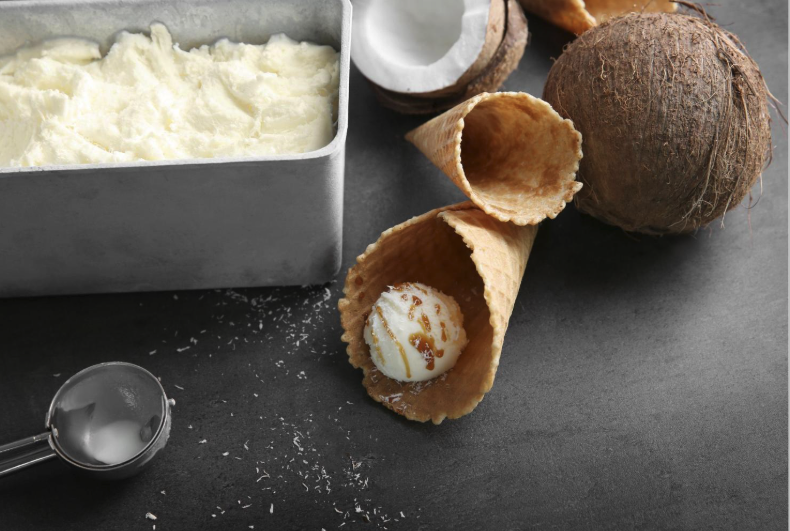
Anyone who has attempted dairy-free ice cream at home knows the usual disappointment. It comes out of the freezer as a solid block, tastes thin, and develops a texture closer to shaved ice than to anything you would want in a bowl. Then you try a version made with full-fat coconut milk and it works, sometimes spectacularly, and the obvious question is what coconut has that almond and oat do not. The answer is mostly fat, and understanding why explains a great deal about frozen desserts in general.
Fat Is What Makes Ice Cream Feel Like Ice Cream
The quality that separates good ice cream from icy disappointment is not sweetness or flavor but the size of the ice crystals in it. Fat interferes with crystal formation, coating water molecules and preventing them from linking up into the large crystals that read as grainy on the tongue. It also carries flavor compounds and contributes the coating mouthfeel that makes the whole thing satisfying. This is why traditional ice cream uses cream rather than milk, and why most low-fat plant milks make such poor substitutes: there is simply not enough fat present to do the structural work. Air matters alongside fat. Churning incorporates air into the base, and that aeration is a large part of why commercial ice cream feels light rather than dense. A mixture frozen without agitation has nowhere for air to go, which is the other reason a bowl of sweetened plant milk left in the freezer comes out as a solid block rather than as anything scoopable.
Where Coconut Has an Advantage
Full-fat coconut milk contains a substantial proportion of fat, which puts it much closer to cream than to the other plant milks in structural terms. That fat is also largely saturated, meaning it stays firmer at low temperatures, which contributes to a scoopable rather than rock-solid result. There is a flavor consideration too, since coconut has a distinct taste that some recipes lean into and others work to mask with chocolate, coffee, or strong fruit. Brands vary more than you might expect, both in fat content and in how much the coconut flavor comes through, so a recipe that worked beautifully once and disappointed the next time may be down to the can rather than the cook. Checking the fat content on the label, and shaking or warming a can that has separated before measuring, removes a surprising amount of inconsistency. Recipes for healthy coconut ice cream generally start from full-fat canned coconut milk rather than the thin cartoned drink, and that distinction matters more than almost any other ingredient choice in the recipe.
What the Word Healthy Actually Means Here
It is worth being clear-eyed about the language, because it gets used loosely. A homemade frozen dessert made with whole ingredients and less added sugar than a commercial equivalent is a reasonable thing to want, and it is still a dessert. The FDA’s food labeling regulations actually define when the word healthy may be used as a nutrient content claim on packaging, which is a narrower and more technical definition than the everyday sense of the term. The practical takeaway for home cooks is simply that making something yourself gives you control over what goes into it, which is a genuine benefit without needing to be overstated into something it is not.
The Sweetener Question Nobody Warns You About
Sugar in ice cream is not only doing flavor work. It lowers the freezing point of the mixture, which is a significant part of why ice cream stays soft enough to scoop. Reduce it substantially and the result freezes harder, sometimes to the point of being unpleasant straight from the freezer. Liquid sweeteners such as maple syrup or honey behave differently from granulated sugar in this respect, and some sugar alcohols produce noticeably firmer results. None of this means you cannot adjust sweetness, only that the texture will change alongside it and that letting a firmer batch sit out for ten minutes before serving solves most of the problem.
Getting the Texture Right at Home
A few techniques make a disproportionate difference. Chill the base thoroughly before churning, since a warm mixture spends longer in the temperature range where large crystals form. Churn it if you have a machine, because incorporating air is the other half of good texture, and if you do not, stir the mixture every twenty minutes or so during freezing to break up crystals as they form. A small amount of alcohol or a spoonful of a liquid sweetener helps keep the final product softer. And store it in a shallow container with a piece of parchment pressed onto the surface, which limits the ice crystals that otherwise form on top between servings.
Where to Take It From Here
Once a base works reliably, it becomes a platform rather than a single recipe. Toasted coconut, dark chocolate, lime zest, roasted stone fruit, cardamom, and salted caramel all sit well against a coconut base, and mix-ins are best folded in near the end of churning so they stay distributed rather than sinking. Swirls of thicker sauces should go in as the mixture is transferred to its container. The useful discipline is to change one thing at a time, because a base that fails after three simultaneous alterations tells you nothing about which one was responsible.

