



Most of us don’t think about our joints until one of them starts complaining. Maybe your knee aches on the way up the stairs, or your shoulder won’t let you reach the top shelf like it used to. Food isn’t going to fix that overnight. Still, what you eat matters more than most people expect. Your bones and muscles get built and repaired from what’s on your plate, and so does the tougher tissue that ties them together. Keeping your weight in a healthy range also takes some of the load off your knees and hips every day.
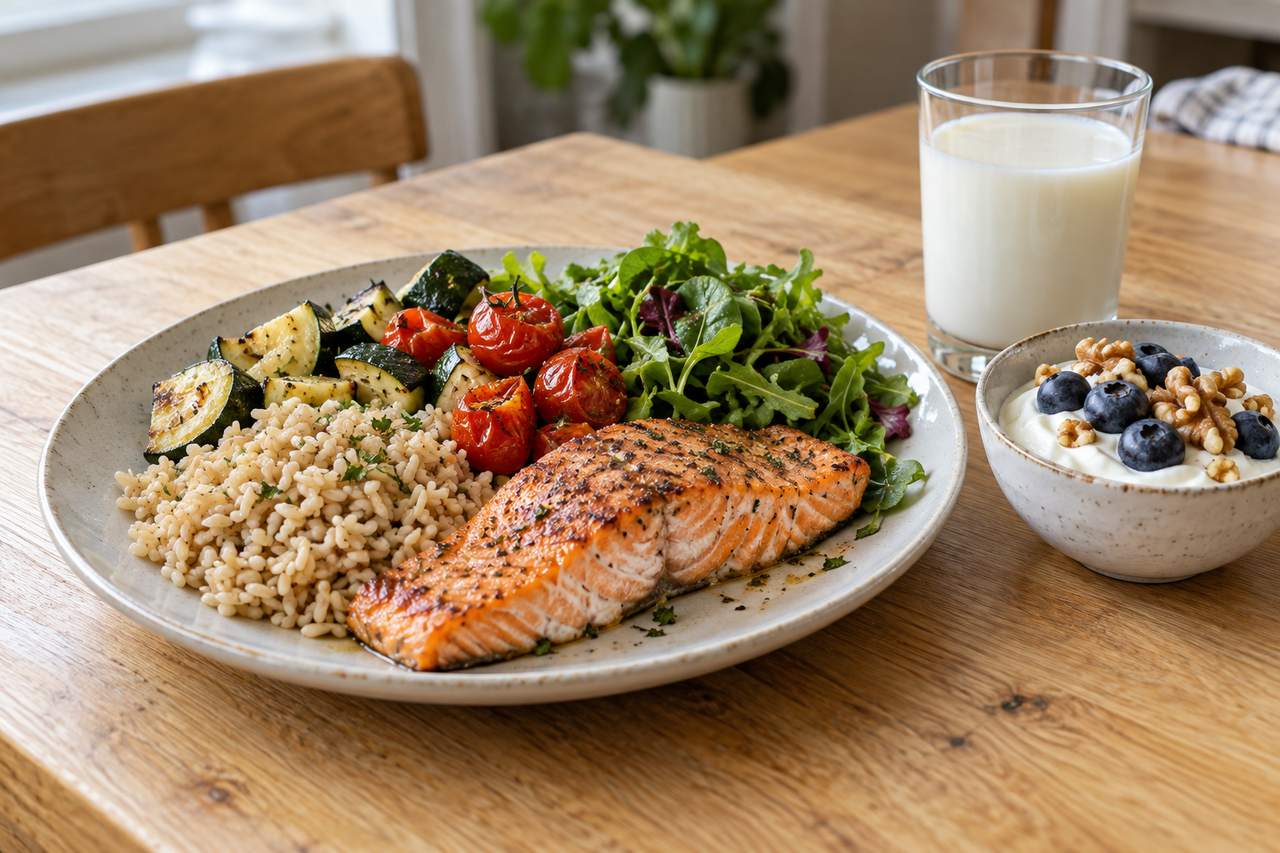
The easiest place to start is with food you actually like eating. I’ll be honest, plain steamed vegetables don’t do it for most people. A little char and a squeeze of lemon go a long way. This grilled zucchini salad is a good example, with smoky zucchini and fresh tomatoes. Put some beans or a piece of fish next to it, add a scoop of brown rice, and that’s dinner.
Feed the muscles that hold your joints together
Your muscles do a lot of the work of supporting your joints. When they get weak, the joint ends up taking more of the strain. Protein is what your body uses to keep that muscle in shape, as long as you’re also staying active. Eggs, yogurt, chicken and fish all count. So do tofu and beans, which means you don’t have to eat meat at every meal to get enough.
Lunch is usually where protein goes missing. A sandwich with one thin slice of turkey, or a bowl of plain noodles, and that’s it. Tossing lentils into your soup or chickpeas onto a grain bowl fixes that pretty quickly. If you want more ideas, here are some everyday plant proteins that work with food you probably already buy. Once you have three or four go-to options, grocery shopping gets easier too.
Don’t forget calcium and vitamin D
Bones are the frame your joints sit in. Calcium keeps that frame strong, but your body needs vitamin D to actually absorb it. So you really want both. For calcium, think milk, yogurt, fortified drinks and tofu that’s been made with calcium. Salmon is one of the better sources of vitamin D, and some cereals and milks have it added. Do check the labels though, because plant milks and yogurts are all over the place on this.
When the stiffness started with an injury
Here’s something worth saying plainly. If your neck or back got stiff after a car accident, a slip on the ice or a hard fall, your diet isn’t the cause, and changing it won’t fix the problem. Injuries like whiplash or a strained lower back often don’t hurt much on the first day. The soreness tends to creep in a day or two later, and a lot of people just wait it out. Sometimes that works fine. Other times the joint stops moving the way it should, the muscles around it tighten up to guard it, and months later you’re still turning your whole body to check your blind spot.
That’s the point where it makes sense to get checked by someone who works with injuries. A chiropractor will look at how each area moves, test your strength and reflexes, and figure out what was actually affected before any treatment starts. If you’ve never been through that kind of visit, Nuro Chiropractic walks through it here, including how the exam works and how changes in movement get measured over time. Good food still helps your body heal, of course. It’s just working in the background while the right care does the heavy lifting.
Mix it up during the day
Fruits and vegetables do more than add color to the plate. Vitamin C helps your body make collagen, and collagen is a big part of your cartilage, tendons and ligaments. You’ll find vitamin C in peppers, oranges and strawberries, plus plenty of other produce. There’s no single magic food here. Eating a mix of things is what covers your bases.
A normal day might look something like this. Oatmeal with berries and a spoonful of yogurt for breakfast. Bean soup and whole grain toast at lunch. Then for dinner, vegetables beside whatever protein you like, with potatoes or rice. How much you eat depends on your appetite, how active you’ve been and what your own body needs.
Small things add up too. Plain yogurt makes a great base for dressing, like in this carrot and dried cranberry salad. Olive oil, nuts and seeds are other easy ways to get healthy fats in, and they make basic meals taste a lot better.
If you’re carrying extra weight, losing some of it slowly can take real pressure off your knees and hips. This is especially true for people with osteoarthritis. But slow is the key word. Skipping meals or cutting out whole food groups usually backfires, and it leaves your body short on what it needs.
And if cooking itself is hard on your joints, there’s no shame in taking shortcuts. Buy the vegetables already cut. Use lighter pots. Keep the things you grab most often at counter height. Honestly, a bag of frozen broccoli and a carton of eggs is enough to get a decent dinner going on a rough day.
Make tomorrow easy
Keep some frozen vegetables, canned beans and oats around, plus a couple of proteins you like. For a snack or a salad topper, try these crunchy roasted garbanzo beans. When the good stuff is already in your kitchen, you don’t have to think as hard about what to make. Start with tomorrow’s breakfast and go from there. Image (Max. 20Mb)